From The Chairman The Department Faculty Students
Graduate Program Application
Courses Seminars
 
> Faculty > Professors > Michael J. Davis

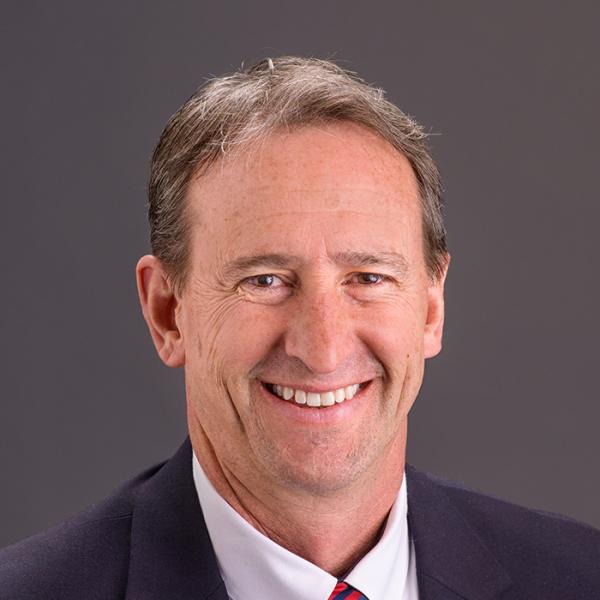
Michael J. Davis, Ph.D.

Professor
DavisMJ@health.missouri.edu

Computer Models for Instruction

Research Interests

The focus of my research is on mechanisms of vascular mechanotransduction: How do vascular cells detect changes in pressure and shear stress? What cellular proteins and signaling pathways are involved in these processes? How are the mechanisms impaired in vascular disease states? Currently, we focus on two main projects with a particular emphasis on the role of vascular ion channels.

1) How is pressure / stretch transduced by extracellular matrix proteins and integrin receptors (adhesion molecules) in vascular smooth muscle to alter the gating of plasma membrane ion channels? Our studies indicate that the L-type, voltage-gated calcium channel and the large-conductance, calcium-activated (BK) potassium channel are acutely regulated by integrin-ECM interactions under both physiological and pathological conditions; ion flux through these channels subsequently controls the contraction/dilation of vascular smooth muscle and arteriolar diameter. We hope to better understand how these mechanisms are altered in diabetes and atherosclerosis, conditions in which alterations in ECM and integrin composition of the vascular wall occur.

2) What ion channels and contractile proteins are important in the control of lymphatic vessel contraction? We have evidence that lymphatic muscle is a hybrid between vascular smooth muscle and cardiac muscle, both in terms of its function and contractile protein composition. Lymphatic contractile mechanisms are poorly understood, yet lymphatic vessel pumping is critical to compensation for the interstitial edema associated with a number of diseases. Our ultimate goal is to selectively improve lymphatic vessel contractility and pumping using pharmacologic tools, without side-effects on blood vessels.

Professional Background

  • BS in Zoology, University of California at Davis
  • PhD in Physiology & Biophysics, University of Nebraska Medical Center
  • Postdoctoral Research, University of Arizona
  • Joined the Department in 2005
  • Recipient of an Established Investigatorship from the American Heart Association
  • Member of Editorial Boards for Microcirculation, Journal of Vascular Research and American Journal of Physiology
  • Past member of NIH Experimental Cardiovascular Sciences Study Section
  • Lyndon B. Johnson Award from Texas Affiliate of the American Heart Association
  • Excellence in Research Award 2001 from Texas A&M University
  • Research funded by the National Institutes of Health


Selected Publications

  • Wu X, Mogford JE, Davis GE, Platts S, Meininger GA, Davis MJ: Modulation of calcium current in rat arteriolar smooth muscle cells by αvβ3 and α5β1 integrin ligands. J Cell Biology 143:241-252, 1998.
  • Davis MJ, Hill MA: Signaling mechanisms underlying the vascular myogenic response. Physiological Reviews 79:387-423, 1999.
  • Wu X, Davis GE, Meininger GA, Davis MJ: Regulation of the L-type calcium channel by α5β1 integrin requires signaling between focal-adhesion proteins. J Biol Chem 276: 30285-30292, 2001.
  • Kawasaki J, Davis G, Davis MJ: Regulation of endothelial cell BKCa channels by avβ3 integrin. J Biol Chem 279(13):12959-66, 2004.
  • Gui PC, Wu X, Ling S, Stotz SC, Winkfein RJ, Wilson E, Davis GE, Braun AP, Zamponi GW, Davis MJ: Integrin receptor activation triggers converging regulation of Cav1.2 calcium channels by c-Src and protein kinase A pathways. J Biol Chem 281(20):14015-14025, 2006.
  • Zhang R, Gashev AA, Zawieja DC, Lane MM, Davis MJ: Length-dependence of lymphatic phasic contractile activity under isometric and isobaric conditions. Microcirculation 14:613-626, 2007.


Techniques/Methodology

Methods developed in my lab are now in use all over the world. Our experimental approaches for the integrin-ion channel project include isolated, perfused microvessel methods and single-cell electrophysiology. We combine these with a variety of imaging techniques, including confocal microscopy and total-internal reflectance fluorescence (TIRF) microscopy. We also use molecular analyses, such as site-directed mutagenesis and co-immunoprecipitation, to identify the specific integrin-associated proteins that are involved in the modulation of ion channels and to identify specific domains on the channels that are required for their regulation.

Experimental approaches for the lymphatic project include the use of servo-control systems for studies of isometric and isobaric lymphatic vessels from rat and mouse. We also maintain isolated lymphatic vessels in organ culture for up to two weeks in conjunction with adenoviral transfection methods to overexpress or silence the expression of specific ion channels and contractile proteins.


Recent Methods Publications

  • Davis MJ: An improved, computer-based method to automatically track internal and external diameter of isolated microvessels. Microcirculation 12:361-372, 2005.
  • Davis MJ, Lane MM, Scallan JP, Gashev AA, Zawieja DC: An automated method to control preload by compensation for stress relaxation in spontaneously contracting, isometric rat mesenteric lymphatics. Microcirculation 14:603-612, 2007.


[From the Chairman] [The Department] [Seminars] [Application] [Courses] [Graduate Program] [Faculty]
 
The Department of Medical Pharmacology and Physiology
MA415 Medical Science Building
University of Missouri School of Medicine
Columbia, MO 65212
elliottmo@health.missouri.edu
+1.573.882.4957
© The University of Missouri
Last Updated: September 27, 2007
University of Missouri - Columbia Home Page MU Health Home Page