From The Chairman The Department Faculty Students
Graduate Program Application
Courses Seminars
 

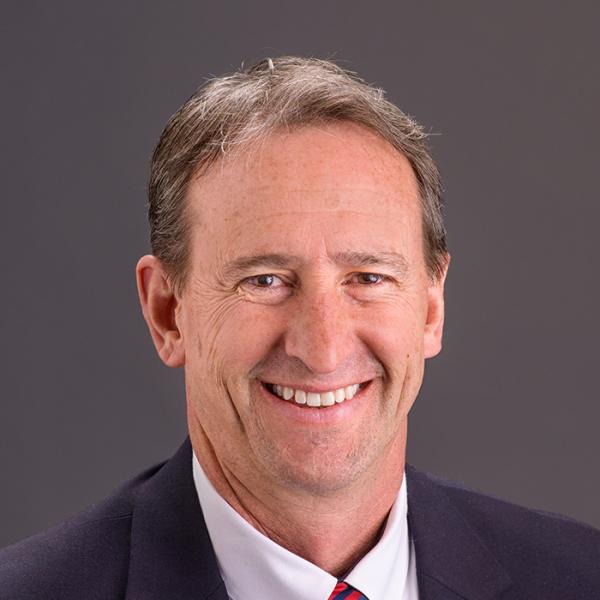
Steven S. Segal, Ph.D.

Professor
SegalSS@health.missouri.edu

Research Interests

Our research is focused on understanding the control of tissue blood flow in light of how oxygen delivery increases in response to metabolic demand. During exercise, the recruitment of skeletal muscle fibers (motor units) generates electrical and chemical signals in endothelial cells and smooth muscle cells of the microvessels that control the distribution and magnitude of muscle blood flow. Our experiments center on elucidating the cellular and molecular events which initiate these signals, how such signals are transmitted from cell to cell to orchestrate vasodilation and vasoconstriction in microvascular networks, and how these integrative processes are governed by the nervous system. Intravital video microscopy enables direct observations of blood flow control in the mammalian microcirculation. Histochemistry and vascular casting are used to quantify the architecture of neural and microvascular networks. Intracellular recording with dye labeling reveals cell-specific electrical signals which determine the contractile status of smooth muscle and its regulation by the endothelium. Calcium imaging provides unique insight into cellular responses which reflect the activity of ion channels and key regulatory enzymes. Complementary studies of isolated microvessels and their constitutive cells enable even greater resolution of specific regulatory processes. Pharmacology, immunolabeling, and Real-Time Polymerase Chain Reaction are used to resolve the functional expression of proteins which mediate cell-to-cell coupling through gap junctions and electrical signaling through ion channels. Collaborative studies using transgenic mice afford unique insight into how particular signaling pathways affect control processes within the microcirculation. In turn, these basic relationships are being explored in light of how aging affects microvascular structure and function. Opportunities for graduate and postdoctoral training include: molecular physiology of vascular cells, electrical and optical monitoring of cell signaling, microsurgery and microdissection, intravital video microscopy, conventional and immunohistochemistry, evaluation of gene expression, and modeling the biophysical properties of cells and tissues.


Background  Information

  • BA and MA in Physical Education/Exercise Physiology, UC Berkeley
  • PhD in Physiology and Education, University of Michigan
  • Postdoctoral National Research Service Award (Microcirculation), University of Virginia
  • Joined the Department in 2006
  • Established Investigator of the American Heart Association
  • Fellow of The American College of Sports Medicine
  • Fellow of the Council on Basic Cardiovascular Sciences, American Heart Association
  • Fellow of the Cardiovascular Section of the American Physiological Society
  • President - elect, The Microcirculatory Society, Inc.
  • Chairman of the Awards Committee for the Cardiovascular Section of the American Physiological Society
  • Associate Editor for Microcirculation
  • Ad hoc member of NIH Study Sections: Hypertension & Microcirculation, Bioengineering Partnership Special Emphasis Panel
  • Research funded by the National Institutes of Health


Selected  Publications

  • Budel, S., I.S. Bartlett, and S.S. Segal. Homocellular conduction along endothelium and smooth muscle of arterioles in hamster cheek pouch: unmasking an NO wave. Circ. Res. 93: 61-68, 2003.
  • VanTeeffelen, J.W.G.E. and S. S. Segal. Interaction between sympathetic nerve activation and muscle fibre contraction in resistance vessels of hamster retractor muscle. J. Physiol. 550.2: 563-574, 2003.
  • Looft-Wilson, R.C., G.W. Payne, and S.S. Segal. Connexin expression and conducted vasodilation along arteriolar endothelium in mouse skeletal muscle. J. Appl. Physiol. 97:1152-1158, 2004.
  • Bearden, S.E. G.W. Payne, A. Chisty and S.S. Segal. Arteriolar network architecture and vasomotor function with ageing in mouse gluteus maximus muscle. J. Physiol. 561.2: 535-545. 2004.
  • Haug, S.J. and S.S. Segal. Sympathetic neural inhibition of conducted vasodilatation along hamster feed arteries: Complementary effects of α1- and α2-adrenoreceptor activation. J. Physiol. 563.2: 541–555, 2005.
  • VanTeeffelen, J.W.G.E. and S.S. Segal. Rapid dilation of arterioles with single contraction of hamster skeletal muscle. Am. J. Physiol. Heart Circ. Physiol. 290: 119-127, 2006.
  • Brekke, J.F., W.F. Jackson and S.S. Segal. Arteriolar smooth muscle Ca2+ dynamics during blood flow control in hamster cheek pouch. J Appl. Physiol. 101: 307–315, 2006
  • Domeier, T.L. and S.S. Segal. Electromechanical and pharmacomechanical signaling pathways for conducted vasodilatation along endothelium of hamster feed arteries. J. Physiol. 579.1:175-186, 2007.
  • Uhrenholt, T.R., T.L. Domeier and S.S. Segal. Propagation of calcium waves along endothelium of hamster feed arteries. Am. J. Physiol. Heart Circ. Physiol. 292: H1634-H1640, 2007.


Methodolgy/Techniques

  • Microdissection and microsurgery
  • Intravital video microscopy
  • Microvascular physiology and pharmacology
  • Intracellular recording from microvascular endothelium and smooth muscle
  • Calcium photometry and imaging of microvascular endothelium and smooth muscle
  • Gene expression in microvascular endothelium and smooth muscle
  • Somatic and Autonomic neural regulation of muscle blood flow
  • Histology and Immunolabeling
  • Vascular casting and network analyses
  • Biophysical properties of microvessels


[From the Chairman] [The Department] [Seminars] [Application] [Courses] [Graduate Program] [Faculty]
 
The Department of Medical Pharmacology and Physiology
MA415 Medical Science Building
University of Missouri School of Medicine
Columbia, MO 65212
elliottmo@health.missouri.edu
+1.573.882.4957
© The University of Missouri
Last Updated: August 22, 2007
University of Missouri - Columbia Home Page MU Health Home Page